
Closed Straits Strategy: From Gallipoli to Hormuz
Key Notes
Gallipoli and Hormuz share the same structural sequence: naval campaign against a littoral power, closed strait, plans for ground deployment. In both cases the defender holds the shoreline where the critical terrain sits within its fire reach. Air and naval dominance have historically not resolved the strait question independently and the interval between signaling and landing has consistently favored the defense.
Oil & Gas Markets Prices have been a primary pressure on the U.S. administration. An immediate ceasefire could provide short-term relief, but may adjourn rather than resolve the underlying shock, particularly if Iran retains the willingness and capability to close Hormuz again in future rounds. This could signal future market volatility, providing Iran with a nuclear option that is not radioactive.
Iran's demonstrated low-cost capacity to interdict global energy flows has produced a signal that regional and Western powers are less likely to leave intact. The next observable decision point turns on whether Iranian leadership reads current U.S. deployments as coercive signaling or concrete preparation, and on the weight of U.S. domestic resistance to a ground operation, and the volatility of the markets.
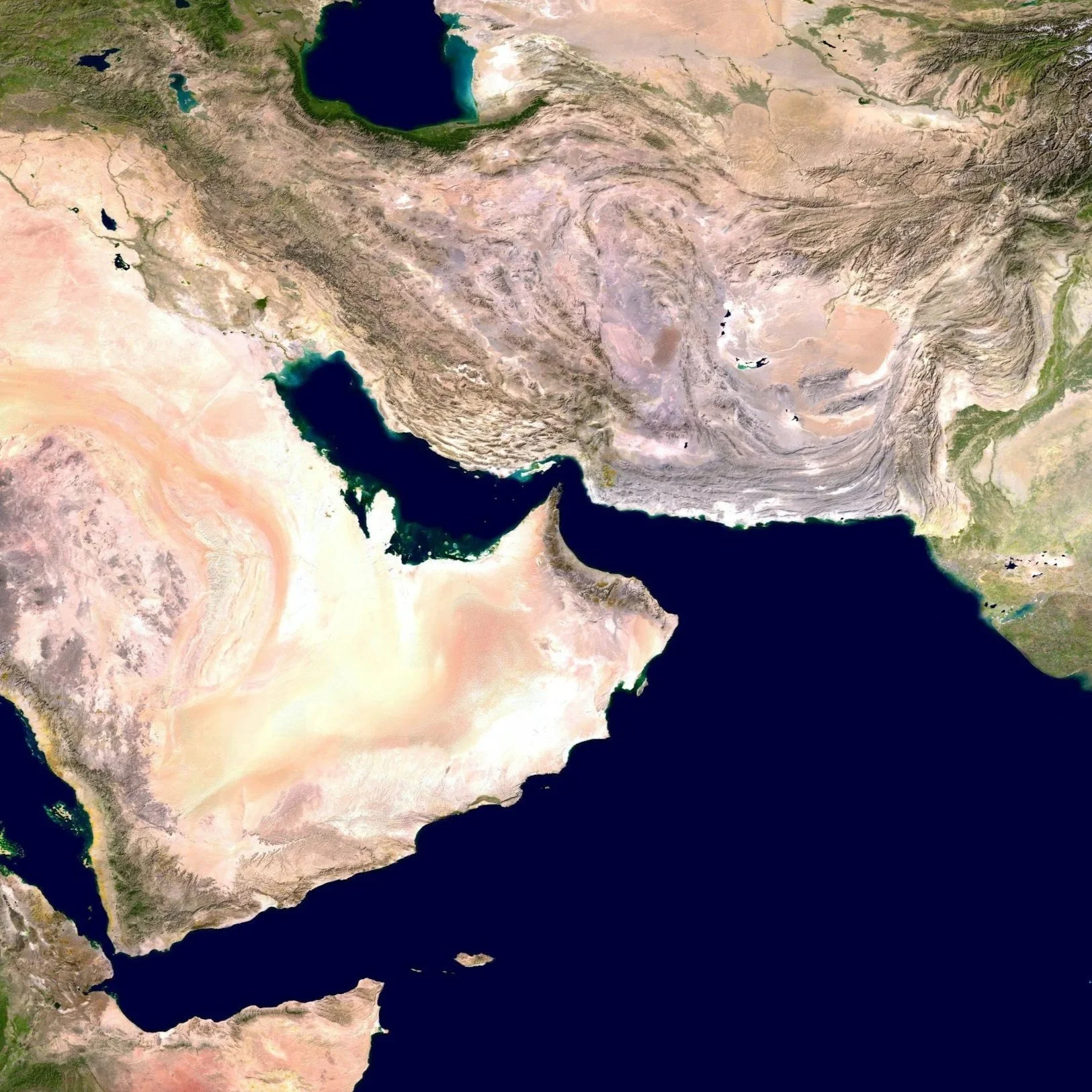
The Strait of Hormuz has emerged as the central fault line of an active U.S.-Iran military confrontation. As the U.S. weighs ground deployment options, including forces on Iran's shoreline and the potential seizure of Kharg Island, the structural dynamics of the operation bear observable resemblance to one of the most studied maritime and amphibious failures in modern military history. In 1915, Allied forces attempted to force the Dardanelles strait, seize a critical peninsula, and knock a regional power out of a world war through a combination of naval assault and ground operations. The attempt failed on every objective. Therefore, it is pertinent to examine what the structural conditions of that 1915 failure reveal about the current situation in the Persian Gulf.
1915 - Gallipoli
Background
The Gallipoli Campaign of 1915-16 was an Allied attempt to force the Dardanelles strait and knock the Ottoman Empire out of the First World War. By securing a direct maritime route to Russia and threatening Constantinople, Allied planners sought to relieve pressure on the Eastern Front and draw wavering Balkan states into the Allied camp. The operation failed on every objective. Allied forces, drawn from Britain, Australia, New Zealand, and France, became fixed in brutal trench warfare against a determined Ottoman defence and withdrew after eight months of catastrophic losses. The campaign remains one of the most analytically instructive failures in the history of maritime and amphibious operations.
Stated Objectives
The operation pursued three layered goals. At the tactical level, forcing the strait would open a viable supply corridor to Russia. At the operational level, the fall of Constantinople could eliminate Ottoman participation in the war. At the strategic level, success was expected to shift the balance of neutral Balkan states toward the Allies, opening a southern axis of pressure on the Central Powers and reducing dependence on the grinding stalemate of the Western Front.
Factors of Failure
Intelligence and Timing: The initial naval assault in March 1915 telegraphed Allied intent without achieving its objective. The Ottomans used the interval before the April landings to massively reinforce defensive positions. Surprise was forfeited before the ground campaign began.
The Defender's Structural Advantage: A strait is a compression point. The attacker funnels forces through a narrow axis, within range of shore defences, minefields, and mobile reserves. The defender concentrates fire economically and shifts forces along interior lines.
The Limits of Naval Power in Confined Waters: Surface vessels in confined, heavily defended straits are vulnerable to shore-based fire, submarine threat, and mining. The March 1915 naval assault did not achieve its objective independently.
Exploitation: The decisive failure at Gallipoli was not the landing but what followed it. Initial landings created tactical openings that were not pressed. Ottoman forces consolidated while Allied commanders deliberated.
Command and Operational Tempo: The Allied command structure was fragmented across national contingents with overlapping authorities. This produced hesitation at moments where the operational situation was moving faster than the decision cycle.
Logistics: Supply lines to the peninsula were chronically insufficient. Ammunition, water, and medical capacity fell below operational requirements throughout the campaign.
Lessons from Gallipoli
Air and naval dominance have historically not proven sufficient on their own to secure control of a contested strait where the defender holds the shoreline.
Ground deployment has tended to follow air and naval insufficiency in strait operations, and has carried its own compounding risks, particularly where the objective terrain remains within the defender's direct fire range throughout the operation.
The gap between signaling intent and executing has historically transferred decisive advantage to the defender. The longer that gap, the more consolidated the defence encountered.
Post-landing exploitation has proven more decisive than the landing itself, between the attacker’s expansion and consolidation and the defendant’s line and resistance.
Fragmented command structures and oscillating political direction have historically correlated with degraded operational tempo at the moments where tempo mattered most.
Logistical strain in strait and amphibious operations has historically compounded other failures.
Operations against high-value, heavily defended objectives within the defender's fire envelope have historically demanded a level of coordination between intelligence, timing, logistics, and command unity.
2026 - Hormuz
The current situation in the Strait of Hormuz presents structural characteristics that invite comparison with the Dardanelles campaign. The United States, three weeks into an active air and naval campaign against Iran, has degraded significant Iranian military capacity without resolving the strait question. Ground deployment options, including forces on Iran's shoreline and the seizure of Kharg Island, are now being reported as live considerations. Iran holds the northern shoreline with missile and drone capacity intact. The political decision cycle is visibly oscillating. The parallels with the structural conditions that preceded and shaped the Gallipoli operation are observable across multiple dimensions.
Examining the Parallels
Gallipoli 1915
Force a strait to open a strategic supply route
Knock out the regional power anchoring enemy resistance
Seize the economic/political nerve centre (Constantinople)
Prevent enemy acquisition of strategic capability (block Russian resupply)
Establish regional dominance by eliminating a hostile power
Hormuz 2026
Force a strait to secure oil tanker passage
Degrade Iran's military and economic capacity, or regime change
Seize the economic nerve centre (Kharg Island, 90% of Iranian oil exports)
Prevent Iranian nuclear weapons acquisition or continuous threat on Hormuz
Eliminate Iranian capacity to destabilize the region
Observations
Based on the historical precedent and the structural parallels between the two situations, several observations follow.
Both straits are compression points with a hostile littoral power on the shore. At Gallipoli, the Ottomans held the peninsula flanking the Dardanelles. At Hormuz, Iran holds the northern shoreline with missiles, drones, and mine-laying capacity already demonstrated.
At Gallipoli, the gap between the naval assault of March 1915 and the ground landings of April 1915 was the interval in which the Ottoman defence consolidated. The US struck Kharg Island on March 13, 2026, constituting a signal. Ground deployment options remain under deliberation, but sufficient time has lapsed for the defending force to significantly reinforce its positions.
Air superiority and naval dominance appear insufficient on their own to guarantee sustained control of a contested strait where the defender holds the shoreline. The Dardanelles demonstrated this in March 1915. The current campaign against Iran, having conducted over 7,800 strikes, has degraded Iranian naval capacity significantly, yet the strait question remains unresolved.
Where air and naval force falls short, ground deployment tends to surface as the logical next step, as reported at the moment in Hormuz. The historical record suggests this sequence: naval failure leading to amphibious escalation, carries its own compounding risks, particularly around the gap between signaling intent and executing it.
Kharg Island, like the Gallipoli Peninsula, remains within direct fire range of the defending power throughout any operation to hold it. Historical precedent indicates that holding terrain under those conditions places exceptional demands on logistics, air cover, and command continuity, demands that tend to be underestimated at the planning stage.
Coalition command fragmentation, which degraded Allied tempo at Gallipoli at critical moments, has a structural analog in any operation where political decision-making oscillates publicly. Elements of this are visible in the current situation between Tel Aviv and Washington DC.
Forecast
Oil & Gas Markets: Rising energy prices have been a primary pressure on the U.S. administration. An immediate ceasefire could provide short-term relief, but may adjourn rather than resolve the underlying shock, particularly if Iran retains the willingness and capability to close Hormuz again in future rounds. This could signal future market volatility, providing Iran with a nuclear option that is not radioactive.
Land Operation: The deployment of the Marine carries observable signaling characteristics consistent with a willingness to conduct a land operation to force open the strait. Whether this constitutes coercive signaling intended to bring Iran to the negotiating table, as Pakistan has been pushing for, or a concrete preparatory move remains, at this stage, indeterminate. The historical precedent in 1915 could be a good indicator to how such a land operation might go.
Strategic Utility: Iran's demonstrated ability to close the strait at low cost and high effect constitutes a signal of asymmetric capability that no regional or Western powers are less likely to leave intact. The threat of closure may have carried greater strategic utility for Iran than its execution, though from a self-preservation standpoint, or as an act of last resort, Iran's decision set may have been considerably narrower than otherwise assessed.
Coercion or Bluff: The next observable decision point rests with the remaining Iranian leadership: whether to treat the deployment as a bluff or to enter negotiations. That calculation appears to turn on two variables: Iran's assessment of its own defensive capacity and the domestic political resistance within the United States to a ground operation.
Arab States: The strait, for now, shows no observable indicators of reopening. That closure is accelerating the economic pressure on Arab states and may be moving them closer to active alignment with the U.S. position.
Israel: Tel Aviv appears committed to eliminating the Iranian regime's strategic threat across two fronts, Iran and South Lebanon, yet seems to be decoupling those theaters from one another. The next phase on both fronts is likely to turn on the alignment and friction between Israeli and U.S. objectives, which do not appear fully congruent.
Russia: Sustained high oil and gas prices are creating conditions from which Russia benefits directly, through increased production capacity and growing leverage over EU states, no incentivized to revisit sanction regimes. Europe’s energy shock mitigation efforts remained slow after the Russian invasion of Ukraine. How that dynamic interacts with the trajectory of the Ukraine war remains an open variable.
